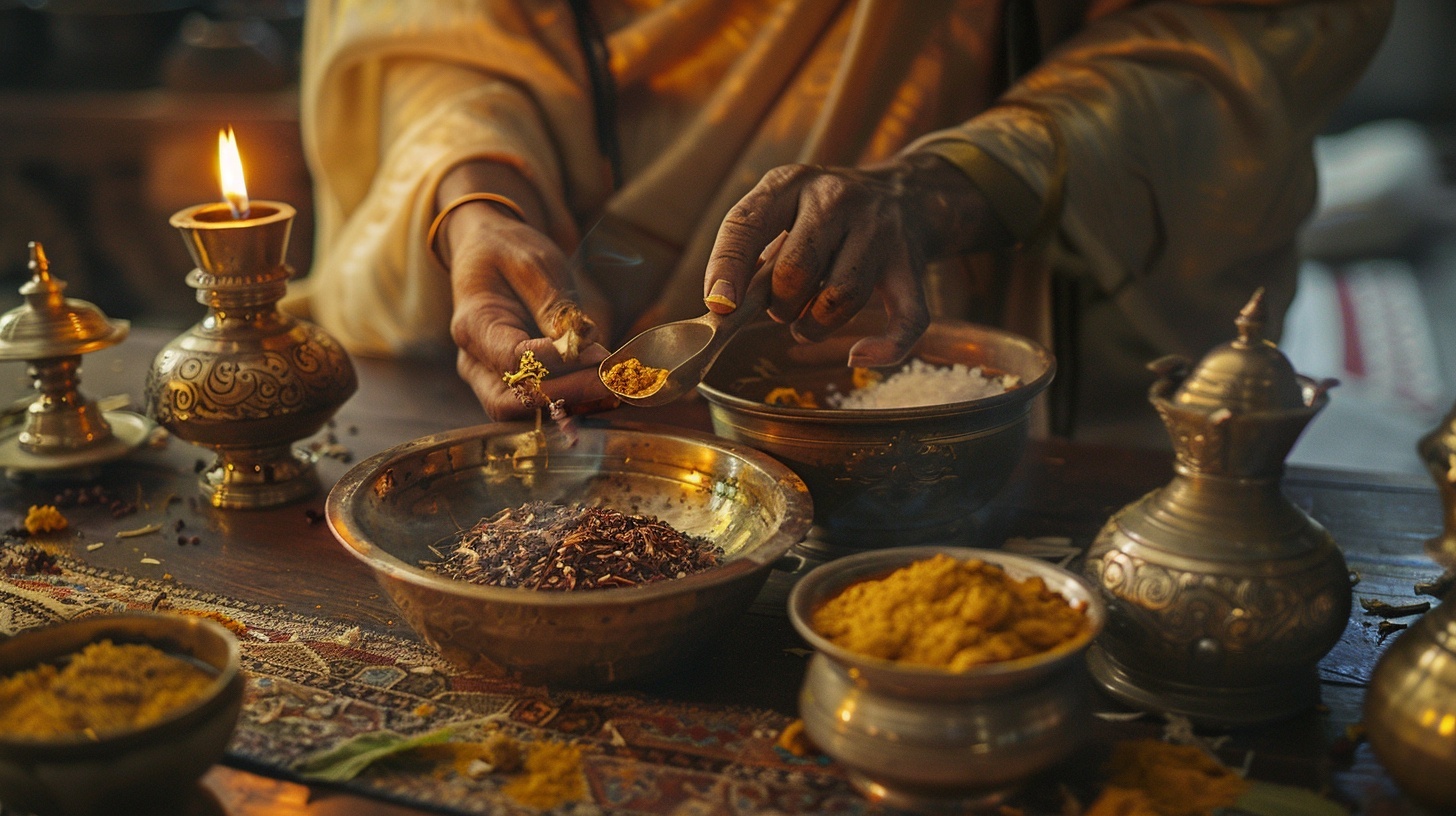
Introduction: The Hidden Depths of Ancient Medicine
When you think of traditional wellness, practices like yoga and meditation likely come to mind. These ancient arts have become global mainstays for managing stress and maintaining health. But what if these familiar methods are just the tip of the iceberg? What other profound, and perhaps strange, healing practices are hidden within ancient medical systems like Ayurveda?
For thousands of years, Ayurveda has developed a sophisticated understanding of the human body that often operates on principles that seem counter-intuitive to our modern sensibilities. It uses food as medicine, smoke as a therapeutic agent, and localized treatments that have surprisingly systemic effects. This article explores five powerful Ayurvedic treatments that challenge contemporary wellness conventions, revealing a different, yet highly effective, approach to health and healing.
——————————————————————————–
1. They Use Medicated Smoke for Healing, Not Harming
In a world that rightly warns against the dangers of smoke, the Ayurvedic practice of Dhoomapana, or medicated smoke inhalation, seems utterly paradoxical. Yet, this is a targeted therapeutic procedure designed to heal, not harm. The core principle is to use smoke as a vehicle to deliver the medicinal properties of herbs directly to the areas where they are needed most: the head, sinuses, and respiratory tract.
Under the strict guidance of an Ayurvedic physician, the method involves inhaling smoke from herbs like Guggulu or Turmeric through a specific tube (Dhumanetra). The smoke is drawn in through the nostrils and exhaled through the mouth, clearing congestion, relieving sinus pressure, and soothing headaches. Where modern medicine sees smoke as an indiscriminate harm, Ayurveda views it as a precise vehicle capable of delivering herbal medicine directly to the source of an ailment.
The smoke acts as a direct delivery system, carrying the medicinal properties directly into the respiratory channels, sinuses, and head region.
2. They Massage You with Bags of Medicated Rice
Imagine a massage where the therapist’s hands are replaced by warm, soft bags filled with medicinal rice. This is Njavarakkizhi, a deeply nourishing therapy that completely blurs the line between food and medicine. The treatment uses a special variety of rice called Njavara, which is renowned for its therapeutic properties.
The preparation is unique: the rice is cooked in a blend of cow’s milk and a potent herbal decoction. This mixture is then divided and tied into small cotton bags, or Kizhis. Often performed by two therapists working in tandem, the treatment is a masterpiece of synchronized motion. They wield the warm, milk-soaked poultices, which release a nourishing, herbal aroma as they are pressed and glided across the skin in rhythmic strokes. This therapy radically challenges the Western separation of nutrition and topical treatment. Here, a staple food becomes a potent medicine, absorbed through the skin to nourish the body from the outside in.
3. They Use Gentle Oil Enemas to Calm Anxiety and Relieve Pain
The word « enema » typically brings to mind a purely clinical, cleansing procedure. Ayurveda, however, reframes this concept entirely with Matra Vasti. Rather than a high-volume flush, this is a gentle, low-dose therapy using warm medicated oil that is administered to be retained and absorbed.
Its purpose is not to cleanse, but to serve as a nourishing (Brumhana) and strengthening (Balya) treatment. By introducing oil into the large intestine, it targets the main site of Vata Dosha—the principle of movement that governs the nervous system and is often the root of pain and anxiety. The benefits are surprisingly far-reaching, including relief from chronic low back pain, improved sleep, and reduced anxiety. Instead of viewing the colon solely as an organ for elimination, Ayurveda sees it as a powerful absorptive pathway for calming the entire nervous system, turning a clinical procedure into a profound act of nourishment.
The large intestine (Pakwashaya) is considered the main seat (Sthana) of Vata Dosha. By introducing the warm, unctuous oil into the colon, Matra Vasti directly pacifies the aggravated Vata.
4. They Apply a Cooling ‘Brain Mask’ for Stress and Insomnia
Think of it as a cooling herbal mask for your head. Known as Shirolepanam or Thalapothichil, this therapy involves applying a thick, freshly made herbal paste over the entire scalp. The paste, often mixed with a cooling medium like buttermilk, is applied in a thick layer, covered with a banana or lotus leaf, and left on for 30 to 60 minutes.
The immediate sensation is one of profound, spreading coolness that seems to draw heat and tension away from the head and face. The primary goal is to calm and stabilize the entire nervous system, making it highly effective for stress, anxiety, insomnia, and poor concentration. Western medicine tends to view the scalp primarily as skin responsible for growing hair. Ayurveda sees it as a critical gateway to the entire nervous system, where external cooling can directly pacify internal turmoil.
5. They Bathe Your Eyes to Fight Digital Screen Strain
In our screen-saturated world, « Computer Vision Syndrome »—eye strain, dryness, and irritation from prolonged digital use—is a distinctly modern problem. Ayurveda, however, has an ancient and elegant solution: Netra Sekam. This treatment is a gentle, soothing eye bath designed to relieve the exact symptoms we face today.
The procedure involves the continuous pouring of a thin stream of a lukewarm medicated liquid, such as a herbal decoction, over the closed eyelids for a duration of 15 to 20 minutes. This gentle stream soothes irritation, hydrates dry eyes, reduces inflammation, and strengthens the eye muscles and nerves. While our modern solution to eye strain is often to « look away from the screen, » Ayurveda offers a proactive therapy—not just an avoidance tactic—that actively soothes, strengthens, and restores the very tissues being stressed.
——————————————————————————–
Conclusion: A New Perspective on Healing
These five treatments reveal a sophisticated and holistic understanding of the body that often diverges from Western conventions. These practices reveal a common philosophy: the body’s surfaces—the respiratory tract, the skin, the colon, the scalp—are not just barriers, but potent gateways for delivering targeted, nourishing medicine. This ancient science reminds us that there are many paths to wellness, some of which are surprisingly different from what we’ve come to expect.
Which of these ancient ideas makes you most reconsider what « healing » can look like?