Imagine a hidden gem nestled deep in Kerala’s backwaters, a tranquil paradise at the picturesque confluence of Ashtamudi Lake and the Kallada River. This is Munroe Island, known to locals as Mundrothuruthu. It’s a serene fabric of green and blue, a network of eight small islands threaded together by narrow, winding canals where the gentle lapping of water against wooden boats is the soundtrack to daily life. For years, it has been a backpacker’s dream, a place of unexpected bliss amid the chaos of India, where coconut groves line the waterways and time seems to stand still.
But this idyllic picture holds a devastating secret. Munroe Island is sinking. Its lush lands are being slowly reclaimed by water, its homes are subsiding, and its residents are becoming some of Kerala’s first climate change migrants. It’s a tragedy unfolding in plain sight, a paradise being lost to the rising tides.
1. It’s Not Just Sinking—It’s Being Starved to Death
The most shocking truth about Munroe Island is that its primary ailment isn’t just drowning but a slow, deliberate starvation. For centuries, the island’s very existence was a gift of the Kallada River. Every year during the monsoon floods, the river would deposit a rich layer of fertile alluvial soil, known locally as ‘ekkal’. This natural process of sedimentation was the island’s lifeblood, constantly replenishing the land, counteracting natural subsidence, and keeping the soil fertile for farming.
This vital, life-sustaining process was severed by a devastating one-two punch of man-made interventions. The first blow came from an irrigation project that began in the 1960s and was officially commissioned in 1986: the construction of the Thenmala Dam. Built 70 kilometers upstream, the dam drastically choked the Kallada River, cutting off the essential supply of both fresh water and sediment that Munroe Island needed to survive. The second blow came from below, as uncontrolled commercial sand mining hollowed out the riverbed, accelerating erosion and deepening the channel.
Together, the dam and the sand mining starved the island of the very material it was built from. This isn’t speculation; it is the scientific consensus on the primary causes of the island’s degradation. A pair of man-made interventions, one an act of large-scale engineering and the other of unregulated extraction, set in motion the slow death of an entire ecosystem downstream.
Lack of required freshwater and sediment supply from the Kallada river after the construction of the Thenmala reservoir in the Kallada river as well as the uncontrolled sand mining prevailed are the key factors for the environmental degradation of Munroe Island.
2. A British Colonel’s Legacy is Being Washed Away
The island’s modern history and its very name are relics of the British colonial era. In the mid-1800s, Colonel John Munro was a powerful British Resident and Dewan (Prime Minister) of the erstwhile Princely State of Travancore. As part of his administrative duties, Colonel Munro granted an isolated island to the Malankara Missionary Church Society to establish a religious study center for training priests. As a gesture of gratitude, the society named the island in his honor: Munroe Island, or Mundrothuruthu.
But the history holds a far deeper irony. Colonel Munro wasn’t just a distant administrator; historical accounts show he was instrumental in the very land reclamation efforts in the delta where the Kallada River meets Ashtamudi Lake.He was a man who helped build up the land, extending the reach of human settlement into the dynamic estuarine environment.
Today, that legacy is being systematically erased. An island named for a man who facilitated the creation of land is now disappearing precisely because a modern, post-colonial development project—the Thenmala Dam—prevents the land from being created. The legacy of an era defined by building land in the delta is being washed away by the consequences of another that starves it.
3. It’s Both a Backpacker’s Paradise and a Resident’s Nightmare
A deep and jarring disconnect exists between the two realities of Munroe Island. For tourists and backpackers, it remains a destination of « unexpected bliss. » Travel guides paint a picture of recuperation and immersion in the « chill rhythm of backwaters life. » Visitors can rent a kayak to paddle through tangled mangrove forests, cycle a 5km loop around the island, grab fresh juice at a riverside restaurant, or try the local toddy, a fermented coconut sap also known as « Coconut Vodka. » It is, from the outside, an authentic, serene escape.
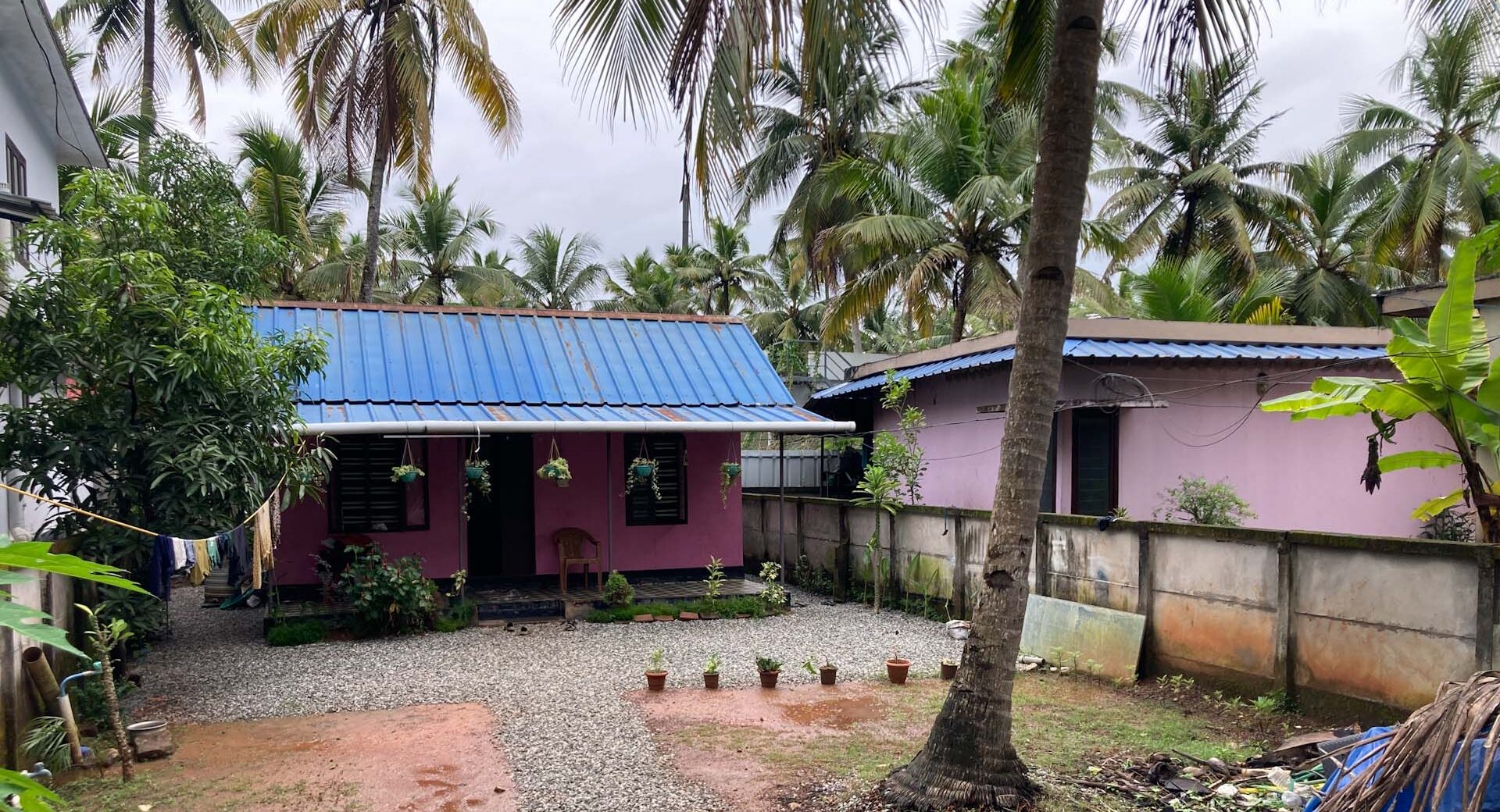
For the permanent residents, however, this paradise has become a living nightmare. Their daily life is a relentless struggle against the water. Houses have sunk two to four feet into the soft soil, their walls permanently damp and paint peeled away. During high tides, saline water floods their homes, leaving behind a pool of brown filth and stench. This saline intrusion has destroyed agriculture, and in a bitter twist, residents find themselves surrounded by water but facing an acute shortage of drinking water, which must often be transported in canoes.
The anguish is captured in the words of one former resident, Mariyakkutty Kochukunj, who was forced to abandon her home:
« My grandson, who was just four years old when we left, had to wade through the water inside the house. We had water coming into the house at least four times a day, but did not have a drop to drink. That was when we decided to leave, not for a better life, but for a normal one. »
4. The Land is Vanishing, and So Are People’s Futures
The degradation of Munroe Island is not just a gradual process; it is a measurable collapse with devastating social consequences. A scientific study using six decades of satellite data found that about 14% of the island’s total land area vanished between 1960 and 2021. The same study warns that the crisis is accelerating, with more than 25% of the remaining area now under stress, leading to further land degradation. In that time, more than 500 households have been forced to abandon their homes, becoming climate refugees in their own state.
The traditional economy has been completely decimated in a sequential collapse. Once known as a regional « rice bowl, » the island’s vast paddy fields were the first to go, destroyed by rising salinity after the dam’s construction. Farmers adapted, shifting to hardier coconut cultivation. For a time, it worked. But as the lack of fresh water and sediment worsened, the coconut farms also began to fail, the trees now standing as barren stumps. With the collapse of coconut cultivation came the end of the local coir weaving industry, which depended on coconut husks for its raw material.
The social fallout is just as severe, felt by those locals call jalamkondu murivettavar— »those who got bruised by water. » The perception that the island is doomed has created a powerful stigma. Young men find it incredibly difficult to secure marriage alliances, as families from the mainland are unwilling to send their daughters to a place they believe « will vanish in the next 10 years. » For many, the ultimate trap is that their land, their only asset, has become unsellable. They are financially stuck, unable to fund a move even as their homes and futures sink into the water.
Conclusion: A Man-Made Warning
The story of Munroe Island is not a simple tale of nature’s wrath or an inevitable consequence of climate change. It is, at its core, a man-made tragedy. It is the direct and predictable result of large-scale infrastructure decisions and a failure of regulatory oversight that prioritized mainland development while failing to account for the immense ecological costs downstream. By severing the island’s fluvial lifeline, the Thenmala Dam and uncontrolled sand mining condemned it to a slow and certain decline. The island was not just forgotten; it was sacrificed.
As communities worldwide face an uncertain climate future, the story of Munroe Island is a stark warning. It forces us to ask a difficult question: What is the true cost of progress, and who is ultimately asked to pay the price?