Pappu could taste the salt on the air long before the first hint of gold touched the Arabian Sea. It was his morning ritual, a silent communion with the giants of the shore: the Cheena Vala, the colossal Chinese fishing nets that were Fort Kochi’s skeletal heart.
He settled onto a worn granite bench as the pre-dawn silence broke, not with a roar, but with the creak of damp rope and the low grunt of the men hauling the counterweighted mechanisms. The nets, looking like massive, arthritic spiders, dipped gracefully into the water and rose again, their delicate webbing glistening with trapped silver. For Pappu, who had been lifting and lowering these same nets since he was a boy, they were not just tools; they were the living archives of the town—a memory of traders from Kublai Khan’s court, long before the Portuguese ships or the Dutch gables arrived.
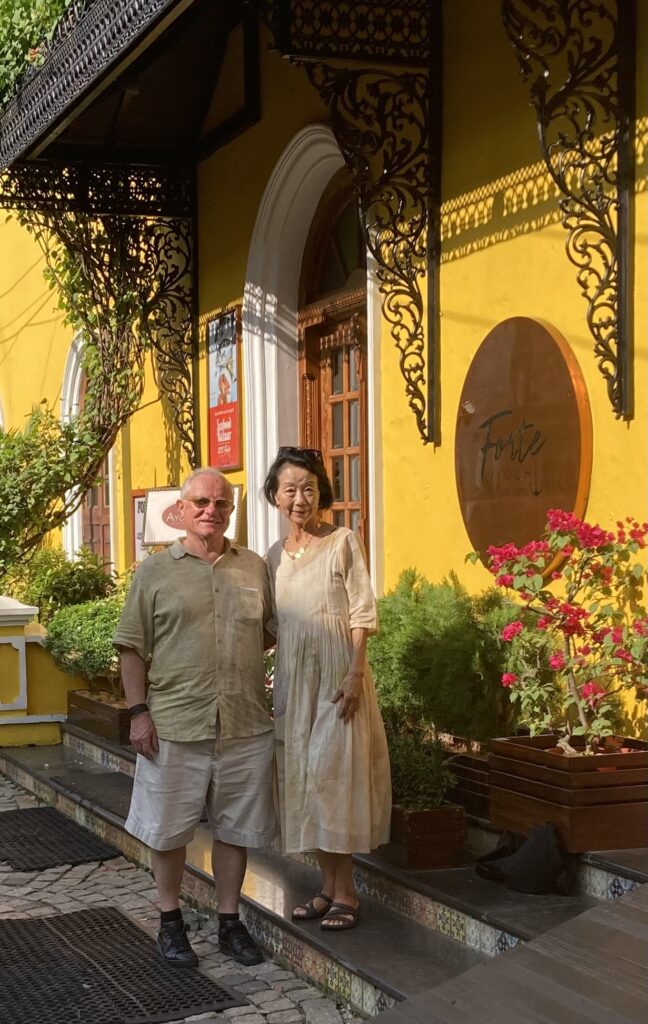
As the sun cleared the horizon, splashing the pastel facades of the old colonial buildings in mango-yellow and burnt sienna, Pappu began his walk inland. The streets were a tapestry of contradictions. On one corner, the faded yellow walls of a Dutch bungalow were crumbling gently, its wooden shutters locked on centuries of secrets. On the opposite wall, a massive, vibrant mural, part of the annual Biennale art festival, exploded with color—a modern, challenging splash of global thought painted over ancient brick. Fort Kochi was not preserved; it was simply lived in.
The air grew heavy and warm as he reached Jew Town. Here, the scent of the sea was overpowered by a heady perfume: the sharp bite of ginger, the dusty sweetness of turmeric, and the intoxicating warmth of freshly crushed cardamom. Merchants stacked burlap sacks high, their voices a melodic negotiation of price and quality, a sound that hadn’t changed since the Paradesi Synagogue was built.
Pappu bought his customary cup of strong, sweet coffee from the stall near the spice warehouse. He watched a young European couple trying to photograph a stray dog sleeping on a pile of cinnamon sticks. He smiled, a slow, gentle curve of his lips. They were trying to capture a moment, but Fort Kochi was not a moment; it was a current. It was the taste of salt on his tongue, the sound of the rigging, the smell of pepper, and the knowledge that everything changes, yet nothing ever truly leaves. The history of the world was piled here, beneath his feet, right where he stood, waiting for the nets to dip again.